This article contains affiliate links. We may earn a commission from qualifying purchases.
Some content on this site is AI-assisted and reviewed by our editorial team.
Winter camping has a math problem nobody prints on the box. Darkness at a winter campsite runs about fourteen hours, and the runtime number on the spec sheet — measured at room temperature, on the lowest setting, by optimistic engineers — quietly dies in the cold the same way disposable batteries do. The camp lantern that matters in November is the one still glowing at 2 a.m. when the fire is down to embers and you still need to find the stove. That number, the low-mode runtime floor, is the one worth ranking.
The other number is money. Four D cells run about $8 to $14 a set at name-brand shelf prices — Energizer’s 8-pack sits near $16 and Duracell’s near $28 at check time — and alkaline capacity sags hard in freezing weather, so the “20-hour” D-cell lantern is a shorter-lived one the night you actually need it. Two or three fresh sets a winter is $16 to $42 you never get back. I ranked four rechargeable lanterns by their published low-mode runtime specs and did the battery math against the disposable habit. Here is what I found.
The Battery Math First, Because It Decides Everything
A rechargeable lantern deletes the D-cell line item, but only if the runtime floor is real. Ranked by lowest-setting specs: the Black Diamond Apollo 250 runs up to about 150 hours on low once you fold in its AA backup, the Moji R+ is rated to roughly 100 hours at its 10-lumen floor, the Coleman Classic Rechargeable 800L runs up to 45 hours on low, and the Rugged Rechargeable 400 tops out at 20. On high everything shortens dramatically — about 5 hours for both Colemans, 6 for the Apollo’s lithium pack — which is why winter campers live on the middle and low settings, and why the floor is the number that matters.
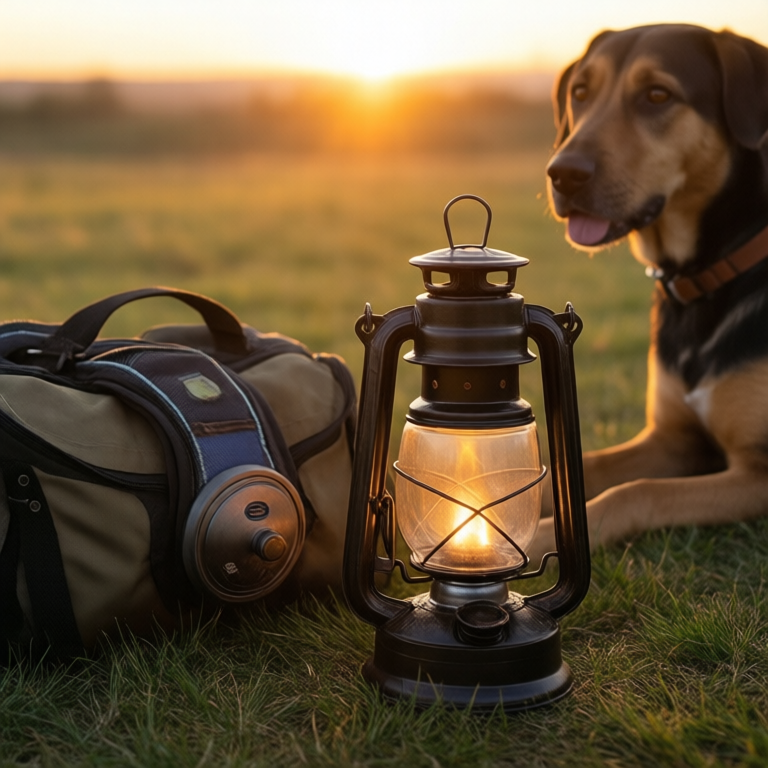
Black Diamond Apollo 250 Lantern — The Basecamp Pick
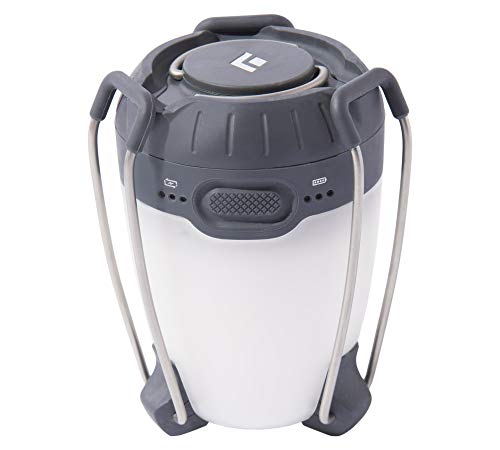
The Black Diamond Apollo 250 is the winter answer, about $38 at check time for the Graphite colorway against a $69.95 list, so colorway-shopping pays. It pushes 250 lumens on max, dims to 10, and runs up to 24 hours on high — 6 from its lithium pack plus 18 more from a 3-AA backup that takes over automatically — and up to 150 hours on low. It carries an IPX4 stormproof rating, a power meter for both power sources, and a USB port that charges a phone in a pinch.
- What it does well: the only lantern here with an alkaline backup, so a forgotten charge never strands you, and the battery meter ends the two-hour guesswork of how much is left.
- Honest cons: a full recharge takes up to 8 hours, and at 250 lumens it lights a table and a tent, not a whole group site.
My take: the winter default — the hybrid power and the 150-hour floor are exactly the cold-weather insurance this ranking is about.
Coleman Classic Rechargeable 800L — The Brightness-Per-Dollar Winner
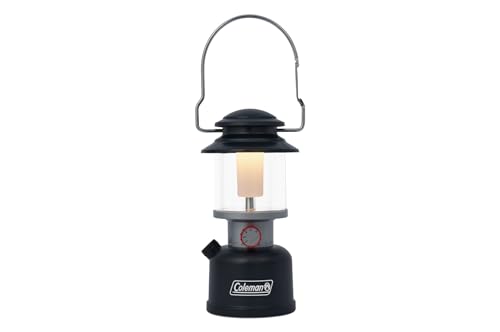
The Coleman Classic Rechargeable 800L is about $60 at check time — 38 percent under its $96.99 list — which makes it the most light per dollar in this ranking. It steps through 800, 300, and 100 lumens with runtimes of 5, 15, and 45 hours, shrugs off a 1-meter drop and IPX4 rain, and its 4,800 mAh pack doubles as a phone charger with both USB-A and USB-C ports. Forty-five hours on low covers four 14-hour winter nights on a single charge.
- What it does well: group-site brightness that turns a dark camp into a kitchen, plus the only USB-C charge-out port here.
- Honest cons: at 2.26 pounds and 13 inches tall it is the bulky one inside a tent, and 5 hours on high is short — plan on medium for real nights.
My take: the basecamp-and-group-crowd pick; on its 300-lumen medium it is the best brightness-per-dollar of the four by a wide margin.
Black Diamond Moji R+ 200 Lantern — The Tent-Top Light
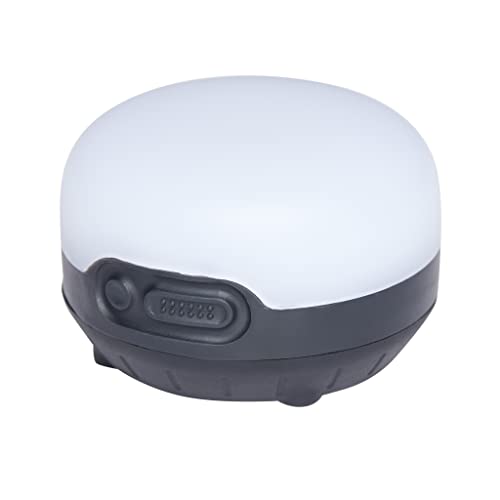
The Black Diamond Moji R+ is the palm-sized one, about $45 street at check time against a $49.95 list. It pushes 200 lumens on max, holds roughly 100 hours at its 10-lumen floor, and its 1,500 mAh pack recharges over micro-USB. The warm campfire mode and full-color RGB settings sound like gimmicks until 9 p.m. in a tent, and the dimming goes low enough to genuinely work as a nightlight.
- What it does well: the lightest grab-and-hang light for inside the tent, with the best warm-light mode of the group.
- Honest cons: micro-USB is the port nobody carries anymore, the charge-port cover is the first thing to fail on these, and about 5 hours at full brightness is the price of the small pack.
My take: the tent interior light — pair it with a bigger camp light and let this one own the inside.
Coleman Rugged Rechargeable 400 — The Beater That Got Expensive
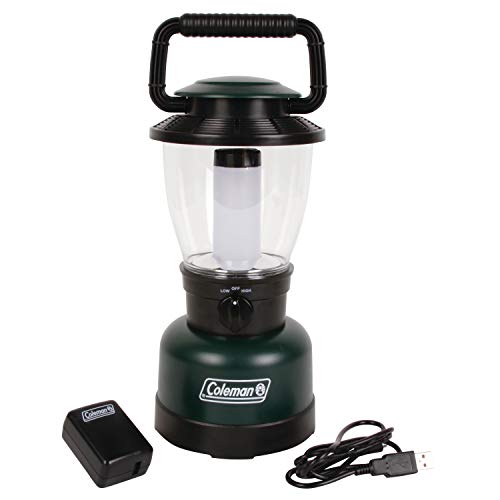
The Coleman Rugged Rechargeable 400 used to be the $25 beater you did not feel bad about bouncing off a truck bed. At check time the sold-by-Amazon listing runs $75.49 — street offers run lower — which changes the verdict even though nothing about the lantern changed. It still throws an honest 400 lumens on high and 100 on low, runs 5 hours high and 20 low, charges a phone over USB, and carries a 4.5-star record across more than 1,400 ratings.
- What it does well: powder-coated, bail-handled, drop-proof — the loan-it-to-anyone lantern that survives truck-bed duty.
- Honest cons: the price. At $75 it is $15 more than the brighter 800L, and its 20-hour low floor trails the rest of this ranking.
My take: still a tank, but at 2026 prices it only wins on a deep discount — the 800L out-lights it for $15 less.
Winter gear ships free with Prime. A 30-day free Prime trial covers two-day shipping on any of these lanterns — worth having before the first cold snap of the season. (GearHound is an Amazon Associate, so a trial signup or purchase through that link supports the site at no extra cost to you.)
Features That Actually Matter (And Ones That Don’t)
- The low-mode floor is the winter spec: you will live on 100 to 300 lumens, not max. Rank by the floor — 150, 100, 45, and 20 hours across these four — and the right winter lantern picks itself.
- A battery meter ends the gamble: the Apollo’s dual-source meter is the difference between leaving camp charged and hoping.
- IPX4 is the winter minimum: sleet, wet snow, and tent condensation kill unprotected electronics. All four carry it; do not buy a lantern that doesn’t.
- USB charge-out doubles the value: the 800L and Apollo moonlight as the camp’s battery bank for a dying phone.
- Lumens are mostly marketing: a 250-lumen lantern lights a table beautifully. 800 only matters when you are feeding a group.
Where to Spend, and What It Costs
- Most winter car campers: Apollo 250, about $38 — hybrid power, the 150-hour floor, and the meter.
- Group basecamps: the 800L at about $60 — most light per dollar, plus phone charging.
- Tent-interior minimalists: the Moji R+ at about $45.
- The disposable habit it replaces: $16 to $42 a winter in D cells, plus the cold-weather capacity you lose for free.
Which rechargeable camp lantern wins for winter?
For most winter campers, the Black Diamond Apollo 250 — its AA backup, 150-hour low floor, and power meter are the cold-weather package. If you light a group site instead of a tent, the Coleman 800L buys more light per dollar than anything else here.
Keep reading: winter camp runs on more than light — the winter stoves that still boil at zero and the camp espresso makers that pull a real shot at 20 below round out the cold-weather kitchen.
GearHound is reader-supported. As an Amazon Associate, I earn from qualifying purchases. That means if you buy through one of the links above, I get a small commission at no extra cost to you. I only recommend gear I’d actually carry into the field.
⛺ Get Your Free Camping with Your Dog Checklist
Join our newsletter and get this free printable plus weekly tips.
Frequently Asked Questions
How many lumens does a campsite lantern need?
For inside a tent or lighting a camp table, 100 to 250 lumens is plenty, and the 10-lumen low mode is what you will actually use most of the night. Save 400 to 800 lumens for lighting a group site or cooking for several people.
Do rechargeable lanterns work in freezing weather?
Yes — they hold up better than alkaline D cells, which lose a large share of their capacity in the cold. Lithium-ion packs slow down a little below freezing, so carry the lantern inside the truck cab rather than an open bed until dusk.
How long do rechargeable camp lanterns run on one charge?
It depends on the setting, not the marketing number. The Apollo 250 runs up to about 24 hours on high and up to 150 hours on low with its AA backup, the Moji R+ is rated to roughly 100 hours at its lowest setting, the Coleman 800L runs up to 45 hours on low, and the Rugged 400 tops out at 20 hours on low.
Are disposable-battery lanterns better in extreme cold?
Not really. Alkaline cells are the weak link in freezing weather, and four fresh D cells run about $8 to $14 at name-brand shelf prices — $16 to $42 over a winter of weekend trips. A rechargeable with an AA backup, like the Apollo, is the more reliable cold-weather choice.
Liked this guide? Get the next one in your inbox — the camp packing checklist is free too.
✓ You're in — check your inbox.
No spam. Unsubscribe anytime. We never share your email.