
This article contains affiliate links. We may earn a commission from qualifying purchases.
Some content on this site is AI-assisted and reviewed by our editorial team.
GearHound is reader-supported. When you buy through links on our site, we may earn an affiliate commission. As an Amazon Associate, we earn from qualifying purchases.
Why a Camping Tarp Deserves a Permanent Spot in Your Pack
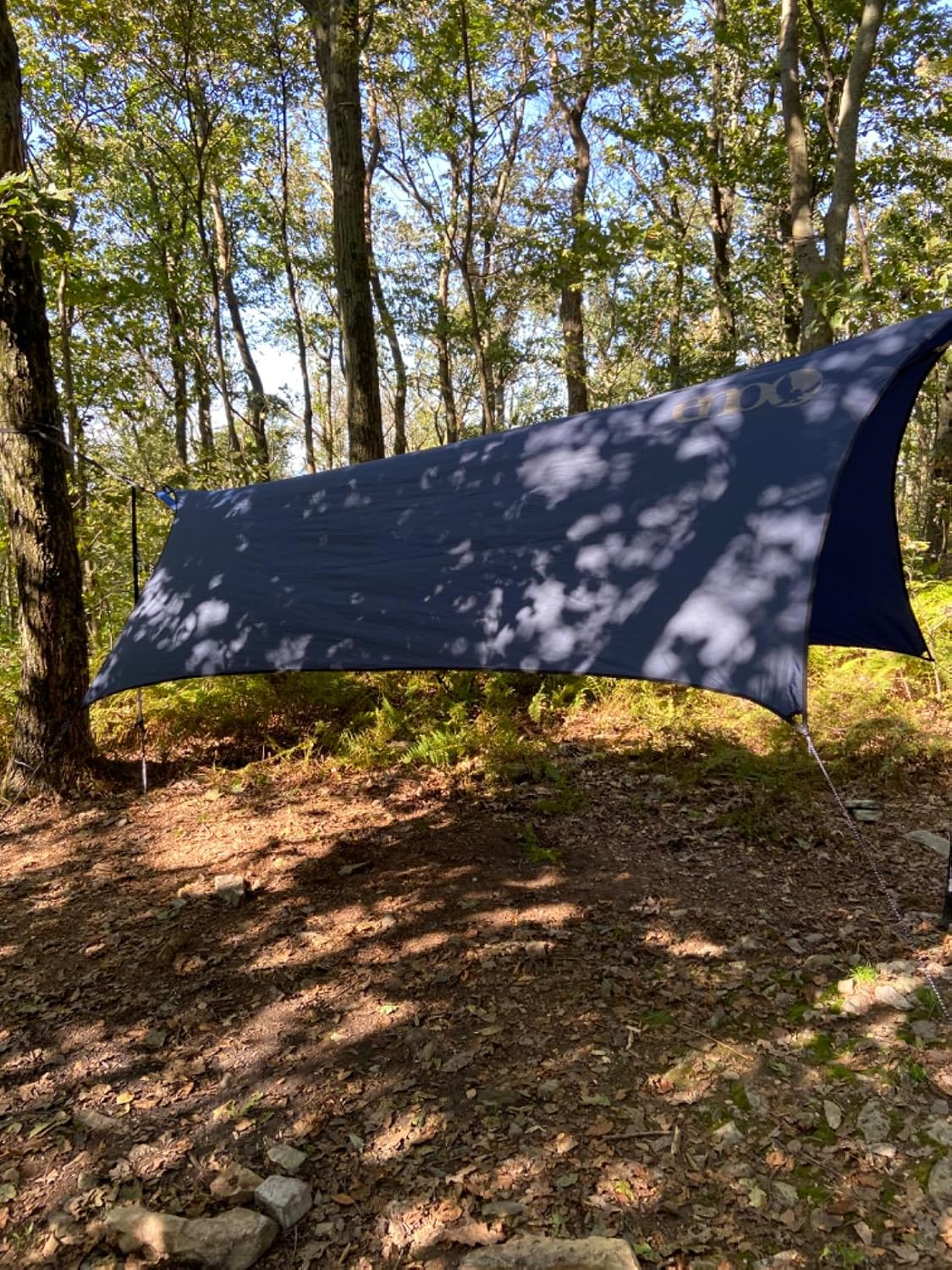
I have been camping in everything from sudden Rocky Mountain thunderstorms to relentless Appalachian drizzle, and if there is one piece of gear I will never leave home without, it is a solid camping tarp. Tents are great, sure, but a good tarp is the Swiss Army knife of shelter. It protects your gear, shades your camp kitchen, covers your hammock, and serves as an emergency shelter when the sky decides to ruin your weekend.
The beauty of a tarp lies in its versatility. Pitch it in an A-frame between two trees for a classic rain fly. Stake it flat as a sunshade over your picnic table. String it diagonally for wind protection on an exposed ridge. Some models even work as ground cloths, gear covers, or improvised pack liners. If you want to dive deeper into shelter options, check out our guide to the best backpacking tents for 2026 for when a tarp alone is not enough.
In this guide, I have tested and ranked five of the best camping tarps available right now. Each one serves a slightly different purpose, from ultralight backpacking shelters to heavy-duty basecamp rain flys. Let us get into it.
What to Look for in a Camping Tarp
Before spending money on a tarp, you need to understand the key features that separate a great one from a cheap blue hardware store special that will disintegrate in one season.
Waterproofing and Coating
The whole point of a tarp is keeping you dry. Look for tarps with silicone impregnation (silnylon) or polyurethane coating with a hydrostatic head rating of at least 1,500mm. Anything below that and you will get misting through the fabric in heavy rain. The best tarps push 5,000mm or higher and feature taped or sealed seams.
Weight and Packability
If you are backpacking, every ounce matters. Ultralight silnylon tarps can weigh under a pound and pack down to the size of a softball. Car campers can get away with heavier, more durable options. Know your use case before buying.
Tie-Out Points and Hardware
More guy-out points mean more pitching options. Look for tarps with at least six tie-out points, reinforced corners, and included guy lines or reflective cord. Aluminum stakes are a bonus; reflective guy lines are even better for finding your way back to camp at night.
Size and Coverage Area
A 10×10 tarp gives you roughly 100 square feet of coverage, which is plenty for a solo camper or a couple with gear. Larger tarps in the 12×12 or 16×16 range are better for groups or basecamp setups. For hammock camping, make sure the tarp is long enough to cover your hammock with at least six inches of overhang on each end.
1. ENO ProFly Rain Tarp: Best All-Around Hammock Tarp
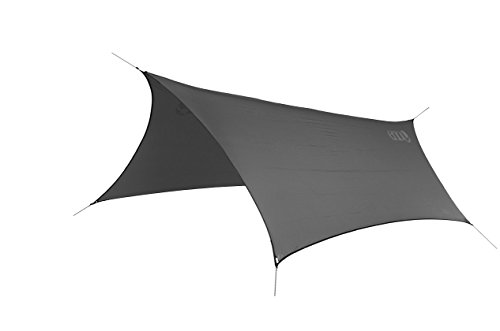
The ENO ProFly is the tarp I reach for most often when I am hammock camping. It strikes a near-perfect balance between coverage, weight, and price, which is why it has been my go-to for three seasons straight.
Made from silicone-impregnated ripstop nylon with a 1,200mm polyurethane coating on the underside, the ProFly sheds water reliably in everything from light drizzle to full-on downpours. The hexagonal shape with six guy-out points gives you solid coverage without the weight penalty of a full rectangle. At 22 ounces packed weight, it is not the lightest tarp on this list, but it is manageable for backpacking trips where you are already carrying a hammock setup.
The ProFly measures 10 feet 6 inches along the ridgeline and 6 feet 4 inches at its widest point, which provides solid coverage for a single hammock. I have weathered several multi-day rain events under this tarp without a single drop making it through. The taped seams do their job, and the stuff sack keeps everything organized in your pack.
Where the ProFly really shines is ease of setup. The six attachment points are clearly labeled and color-coded, which means even when you are setting up in the dark with rain coming down, you can get it pitched in under five minutes. The included guy lines and aluminum stakes are functional, though I upgraded to reflective paracord after my first season for better visibility.
If you are looking for the best hiking and camping tarp for hammock use without breaking the bank, the ProFly is hard to beat. It costs less than premium cottage tarps but performs nearly as well in most conditions.
Pros
- Excellent waterproofing with taped seams and 1,200mm PU coating
- Six color-coded guy-out points for easy setup
- Fairly lightweight at 22 ounces for the coverage it provides
- Good value compared to premium cottage industry tarps
Cons
- Not full coverage for four-season winter use
- Stock guy lines could be longer for some pitches
- Hexagonal shape limits pitching configurations compared to rectangular tarps
2. Sea to Summit Escapist Tarp: Best Ultralight Backpacking Tarp
If you are the type of backpacker who counts every gram and obsesses over base weight, the Sea to Summit Escapist Tarp is your shelter. This is the tarp I take when I want to go fast and light on multi-day backpacking trips where a full tent would slow me down.
The Escapist is made from Sea to Summit’s proprietary ultralight nylon, which is significantly lighter than standard silnylon. The large size measures 117 by 98 inches, giving you generous coverage for a tarp this light. The fabric is treated with a DWR finish that beads water beautifully, and the seams are tape-sealed for full waterproofness.
What sets the Escapist apart from other ultralight tarps is the thoughtful design. It features 16 guy-out points along the perimeter, which gives you an incredible range of pitching options. You can set it up as an A-frame, a diamond pitch, a lean-to, or even a partially enclosed shelter depending on conditions. The corners are reinforced with extra stitching, and the guy lines are pre-attached with line-lock tensioners that make it easy to get a drum-tight pitch.
At roughly 16 ounces including the stuff sack, the Escapist is one of the lightest full-coverage tarps on the market. It packs down to about the size of a grapefruit, which means it disappears into your pack until you need it. I have used it as a rain fly over my hammock, a sunshade over my cook area, and even as a ground shelter in a pinch.
The one thing to be aware of is that the ultralight fabric is more delicate than heavier tarp materials. You need to be more careful around sharp rocks and branches. But if you treat it right, the Escapist will keep you dry and comfortable on the most demanding backcountry trips.
Pros
- Extremely light at 16 ounces for a full-coverage tarp
- 16 guy-out points for maximum pitching versatility
- Tape-sealed seams and DWR finish for reliable waterproofing
- Pre-attached guy lines with line-lock tensioners
Cons
- Delicate fabric requires careful handling
- More expensive than heavier, less versatile tarps
- Stakes not included
3. Aqua Quest Safari Tarp: Best Heavy-Duty All-Weather Tarp
When the weather forecast looks ugly and you need a tarp that can take a beating, the Aqua Quest Safari is the one you want. This is a serious piece of weather protection built for sustained rain, heavy wind, and stubborn conditions that would send lesser tarps flapping into the trees.
The Safari Tarp is constructed from a lightweight nylon with a 5,000mm waterproof rating, which is about as burly as it gets in a portable camping tarp. Every seam is tape-sealed, and the fabric is treated with a dual-sided coating that makes it highly water-resistant while remaining flexible in cold temperatures. The result is a tarp that laughs at horizontal rain and keeps you bone-dry underneath.
Aqua Quest offers the Safari in multiple sizes, from a compact 6 by 9 feet up to a massive 20 by 13 feet. I tested the 10 by 10-foot version, which hits the sweet spot for solo campers and pairs. It provides 100 square feet of coverage with 16 tie-out points around the perimeter, giving you tons of flexibility for different pitches.
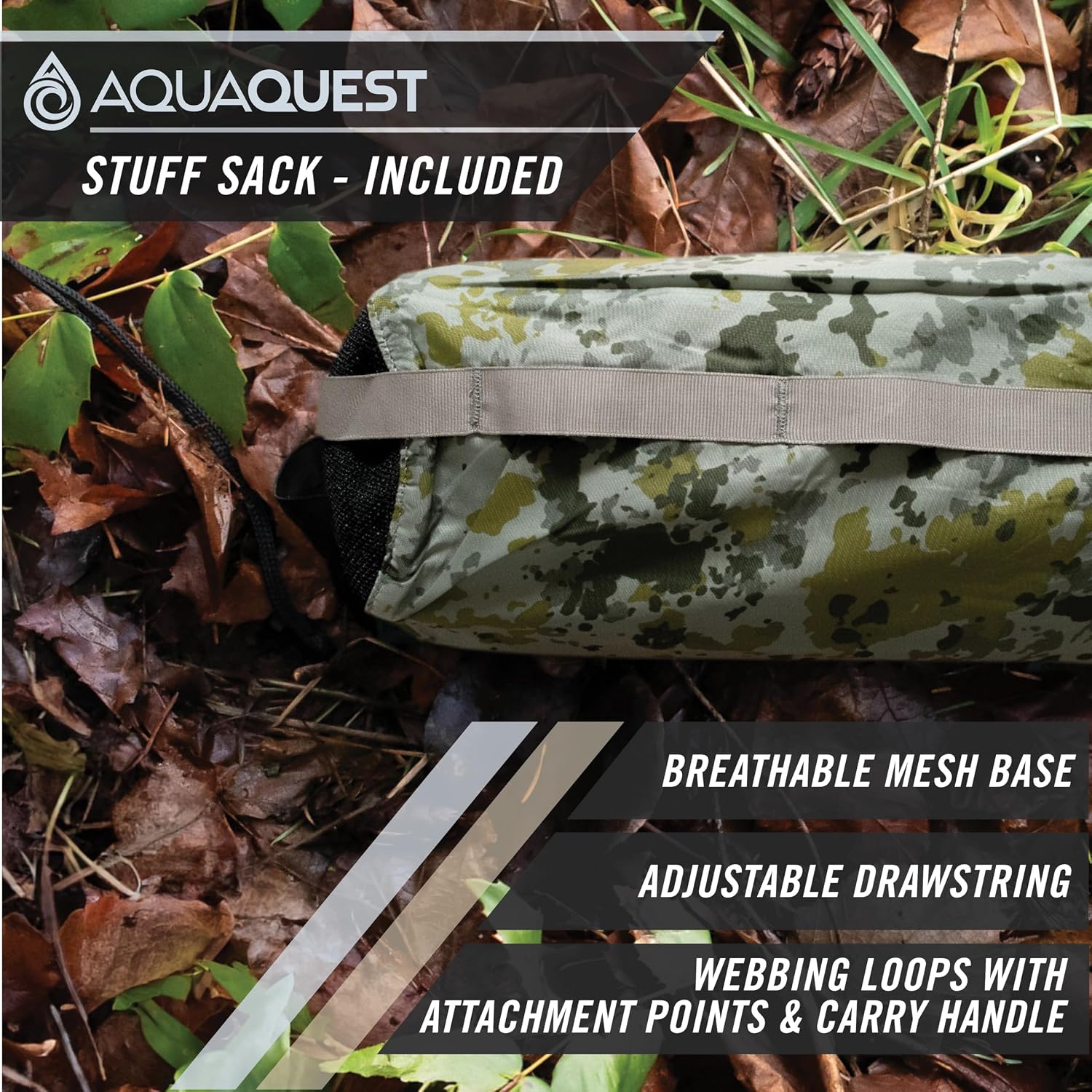
What impressed me most about the Safari was its durability. The fabric feels tough without being stiff, and the reinforced tie-out points have held up to aggressive guying-out in 30 mph winds. The tarp comes with a stuff sack and a repair patch, which is a nice touch for extended backcountry trips where you cannot just run to the store for replacements.
If you are setting up a camp kitchen that needs to stay dry through a multi-day storm, or you want a reliable shelter for a basecamp where you will be spending several days, the Aqua Quest Safari is an excellent choice.
Pros
- Exceptional 5,000mm waterproof rating
- 16 tie-out points for maximum stability and pitching options
- Multiple size options from compact to massive
- Durable fabric holds up in heavy wind and rain
- Includes repair patch for backcountry fixes
Cons
- Heavier than ultralight alternatives
- Stakes and guy lines not always included depending on the size
- Pricey compared to basic camping tarps
4. Kelty Noah’s Tarp 12: Best Budget-Friendly Versatile Shelter
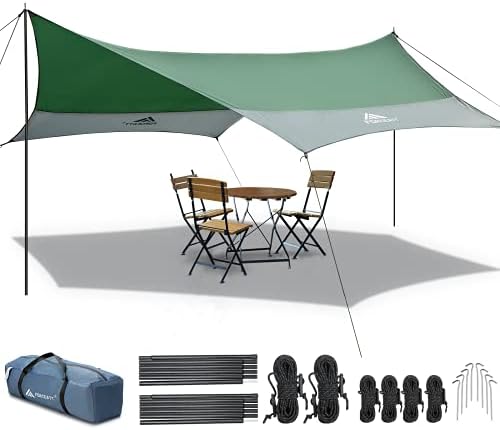
The Kelty Noah’s Tarp 12 is the tarp I recommend to friends who are just getting into tarp camping and do not want to spend a fortune. It is also the one I grab for casual car camping trips where weight is not a concern but versatility matters. The 12 by 12-foot size gives you 144 square feet of coverage, which is enough to shelter a small group, a cooking area, and gear.
Made from 68D polyester with a DWR finish and full seam taping, the Noah’s Tarp is properly waterproof. It will not win awards for ultralight packing, but it shrugs off rain without issue and provides genuine UV protection for sunny days. The fabric has a nice heft to it that makes it feel durable, and after a season of use across two states, mine shows zero signs of wear.
Kelty includes attached corner guylines and reinforced guyout points at each corner and along the edges. You get a storage pocket sewn into the tarp itself, which is a clever touch that keeps small items off the ground. The tarp pitches in a classic diamond shape or can be set up as an A-frame using trekking poles or dedicated tarp poles.
One important note: poles are not included. You will need to use trekking poles, find suitable branches, or buy dedicated tarp poles. I paired mine with adjustable aluminum poles and had no issues. The attached guy lines are functional but somewhat thin, so I upgraded to thicker reflective cord for better visibility and grip.
For the price, the Noah’s Tarp 12 is remarkably capable. It is not the lightest or the most technically advanced tarp on this list, but it does everything a camping tarp needs to do without complaint. If you want a reliable, do-everything shelter for car camping, festival camping, or occasional backpacking, this is the one.
Pros
- Excellent value for the coverage and quality
- Large 12 by 12-foot size provides 144 square feet of shelter
- Properly waterproof with seam taping and DWR finish
- UV protection for sunny weather use
- Sewn-in storage pocket is a handy feature
Cons
- Poles not included
- Stock guy lines are thin and benefit from upgrading
- Heavier than silnylon alternatives, making it less ideal for backpacking
5. ENO DryFly Rain Tarp: Best Compact Rain Fly for Hammock Campers
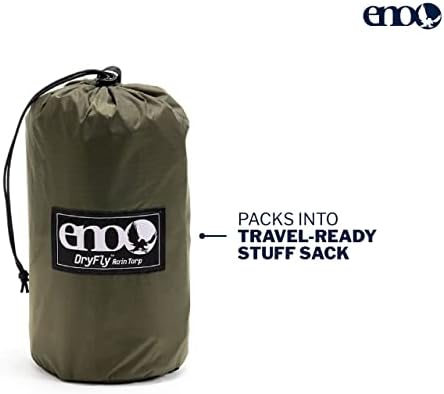
The ENO DryFly is the tarp I recommend for hammock campers who want maximum coverage in a compact, easy-to-pitch package. While the ProFly is my everyday go-to, the DryFly steps up when the weather turns serious and you need full-length coverage that wraps around your hammock like a cocoon.
The DryFly features an 8-point anchor system with a diamond-shaped footprint that measures 12 feet 10 inches along the ridgeline and 8 feet 6 inches at its widest point. This extended ridgeline provides full coverage for a standard hammock setup, including the ends where wind-driven rain loves to sneak in. The overlapping doors can be pinned open for ventilation or secured shut for full weather protection.
Built from the same silicone-impregnated ripstop nylon as the ProFly, with a 1,200mm PU coating on the underside, the DryFly is fully waterproof with taped seams. The fabric is quiet in the wind, which matters more than you might think when you are trying to sleep through a storm. Noisy tarps keep you awake all night flapping in the breeze; the DryFly stays quiet and taut.
At 25 ounces, the DryFly is slightly heavier than the ProFly due to the larger coverage area and additional tie-out points. The 8-point system takes a few minutes longer to set up, but the coverage is significantly better for extreme weather. I have ridden out sustained 40 mph winds and driving rain under this tarp without a single leak.
The DryFly comes with a stuff sack, guy lines, and aluminum stakes. The included guy lines are pre-cut and pre-attached, which saves setup time. The stakes are decent but I swapped mine for longer titanium stakes for better holding power in loose soil.
If you are a hammock camper who prioritizes weather protection above all else, the DryFly is the ENO tarp to get. It costs a bit more than the ProFly, but the extra coverage is worth it when the weather goes sideways at 2 AM.
Pros
- 8-point anchor system for maximum stability in extreme weather
- Extended 12 foot 10 inch ridgeline provides full hammock coverage
- Overlapping doors for adjustable ventilation vs. weather protection
- Quiet fabric stays taut in high winds
- Includes guy lines, stuff sack, and aluminum stakes
Cons
- Heavier and bulkier than the ProFly
- More expensive than the ProFly
- 8-point setup takes longer than 6-point systems
- Diamond shape is less versatile for non-hammock uses than rectangular tarps
How to Choose the Right Camping Tarp for Your Needs
For Hammock Camping
Hammock campers need a tarp that covers the full length of their hammock with overhang on both ends. Look for a ridgeline of at least 11 feet and a width that provides good side coverage. The ENO ProFly and ENO DryFly are both excellent choices, with the DryFly offering more coverage for extreme weather.
For Backpacking
Weight and packed size are the priority. Look for silnylon or DCF tarps under 16 ounces that pack down small. The Sea to Summit Escapist is the clear winner here, offering full coverage at ultralight weight. Just be prepared to handle it carefully.
For Group Camping and Basecamp
Coverage area and durability matter more than weight. Look for larger tarps in the 12×12 to 16×16 range with robust construction. The Aqua Quest Safari and Kelty Noah’s Tarp 12 both excel in this category, with the Safari offering superior weatherproofing and the Noah’s Tarp offering better value.
For Multi-Use Camp Shelter
If you want one tarp that can do everything, look for a rectangular or catenary-cut tarp with at least 8 tie-out points. The Kelty Noah’s Tarp 12 is the most versatile option on this list, working equally well as a sunshade, rain fly, or wind break.
Tarp Pitching Tips From the Trail
Getting a tarp pitched correctly is the difference between a comfortable camp and a miserable night. Here are the techniques I use most often:
The A-Frame Pitch: This is the most common and versatile pitch. Tie the ridgeline between two trees at the height you want, then stake out the corners. Use trekking poles or dedicated poles for the high point if trees are not available. This pitch sheds rain well from both sides and provides good headroom.
The Diamond Pitch: A simpler pitch for quick shelter. One corner goes high on a tree or pole, and the opposite corner stakes to the ground. The two side corners stake out wide. This pitch is fast to set up and provides good rain protection but less wind protection than an A-frame.
The Lean-To: The best pitch for wind protection. The tarp’s back edge goes low and the front edge goes high, creating a sloped shelter that blocks wind from one direction. Use this when the wind is consistent and you need a cooking shelter.
Always carry extra guy line cord. The stock cord that comes with most tarps is too short for some pitches, and having a few extra feet of reflective paracord has saved me more than once when a tree was farther away than expected.
Bottom Line
A good camping tarp is the most versatile piece of shelter gear you can own. It weighs less than a tent, sets up in minutes, and adapts to conditions that would leave a tent useless. Whether you are hammock camping on the AT, setting up a cook shelter in the rain, or just needing shade at a festival, the right tarp makes every trip better.
For most campers, the ENO ProFly is the best all-around choice. It is well-built, reasonably priced, and handles three-season weather without complaint. Ultralight backpackers should look at the Sea to Summit Escapist for its incredible weight-to-coverage ratio. If you need serious weather protection, the Aqua Quest Safari’s 5,000mm rating is hard to beat. For budget-conscious campers, the Kelty Noah’s Tarp 12 delivers excellent value. And for hammock campers facing extreme weather, the ENO DryFly provides the coverage you need to sleep through any storm.
Whatever tarp you choose, practice pitching it at home before you take it into the backcountry. A tarp you cannot pitch quickly in the rain is not a shelter; it is a liability. Get familiar with your gear, carry extra cord, and sleep dry.
⛺ Get Your Free Camping with Your Dog Checklist
Join our newsletter and get this free printable plus weekly tips.
Price Check
Prices verified via our product tracker. Updated Sep 27.
| Amazon.com: Sea to Summit Escapist Tarp Ultralight Shelter | $248.13 | 4.8★ |
| Amazon.com : AquaQuest Safari Tarp – Lightweight Waterproo | $109.99 | 4.6★ |
| Amazon.com : Kelty Noah's Tarp – Waterproof Camping Tarp S | $109.95 | 4.5★ (357) |
| Amazon.com : ENO, Eagles Nest Outfitters DryFly Rain Tarp, | $273.90 | 4.9★ (118) |
As an Amazon Associate we earn from qualifying purchases.