
This article contains affiliate links. We may earn a commission from qualifying purchases.
Some content on this site is AI-assisted and reviewed by our editorial team.
# Best Dog Car Harnesses 2026: Crash-Tested Safety for Every Trip
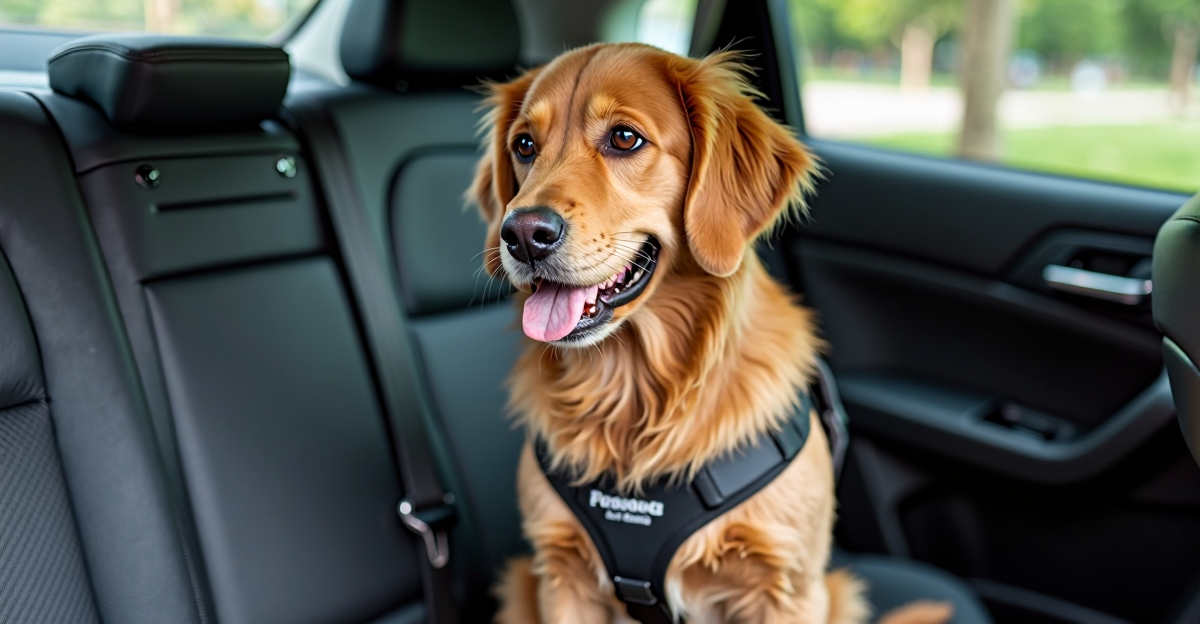
You wouldn’t let your kid ride without a seatbelt. But every day, millions of dogs ride loose in cars — on laps, hanging out windows, or sliding around the back seat. In a 30 mph crash, an unrestrained 75-pound dog becomes a 2,250-pound projectile. That’s dangerous for your dog, dangerous for you, and dangerous for anyone else in the car.
A dog car harness is not the same as a walking harness. Walking harnesses distribute pulling force across the chest. Car harnesses are built to withstand crash forces — they use wider straps, reinforced stitching, and metal hardware rated for impact. The best ones are independently crash-tested.
We looked at the harnesses with real safety certifications, tested the ones that claim to be safe without backing it up, and picked the options that will actually protect your dog in a crash — not just look like they might.
What Makes a Car Harness Safe (and What Doesn’t)
Crash testing matters. Look for harnesses tested to a recognized standard. The Center for Pet Safety (CPS) is the gold standard — they test harnesses at 30 mph with realistic weighted dog dummies, measuring chest plate deflection and structural integrity. A harness that passes CPS testing has proof it works. A harness that says “tested” without naming who tested it or what standard they used is marketing, not safety data.
Hardware matters. Plastic buckles break under crash forces. Metal hardware — specifically steel or heavy-duty alloy — holds up in real impacts. The difference is not theoretical. Plastic buckles have failed in independent tests at forces well below what a real crash generates.
Strap width and padding. In a crash, narrow straps concentrate force on a small area of your dog’s chest, which can cause internal injuries. Wider straps (1.5 inches minimum, 2 inches preferred) distribute force. Padding helps prevent bruising and gives the harness something to compress against instead of your dog’s ribcage.
Fit is critical. A car harness that doesn’t fit correctly won’t protect your dog. It needs to be snug enough that your dog can’t slip out under force, but not so tight that it restricts breathing or causes discomfort during normal riding. Measure your dog before you buy — see our best dog harnesses guide for measurement tips that apply to car harnesses too.
Seatbelt attachment method. Some harnesses attach directly to the seatbelt. Others use a tether that connects the harness to the car’s LATCH anchors (the same anchors used for child seats). LATCH-based systems generally provide a more secure connection, but seatbelt-attached harnesses are easier to move between vehicles.
—
my picks: Best Dog Car Harnesses
### 1. Sleepypod Clickit Terrain — Best Overall (CPS Certified)
Sleepypod Clickit Terrain Dog Car Harness
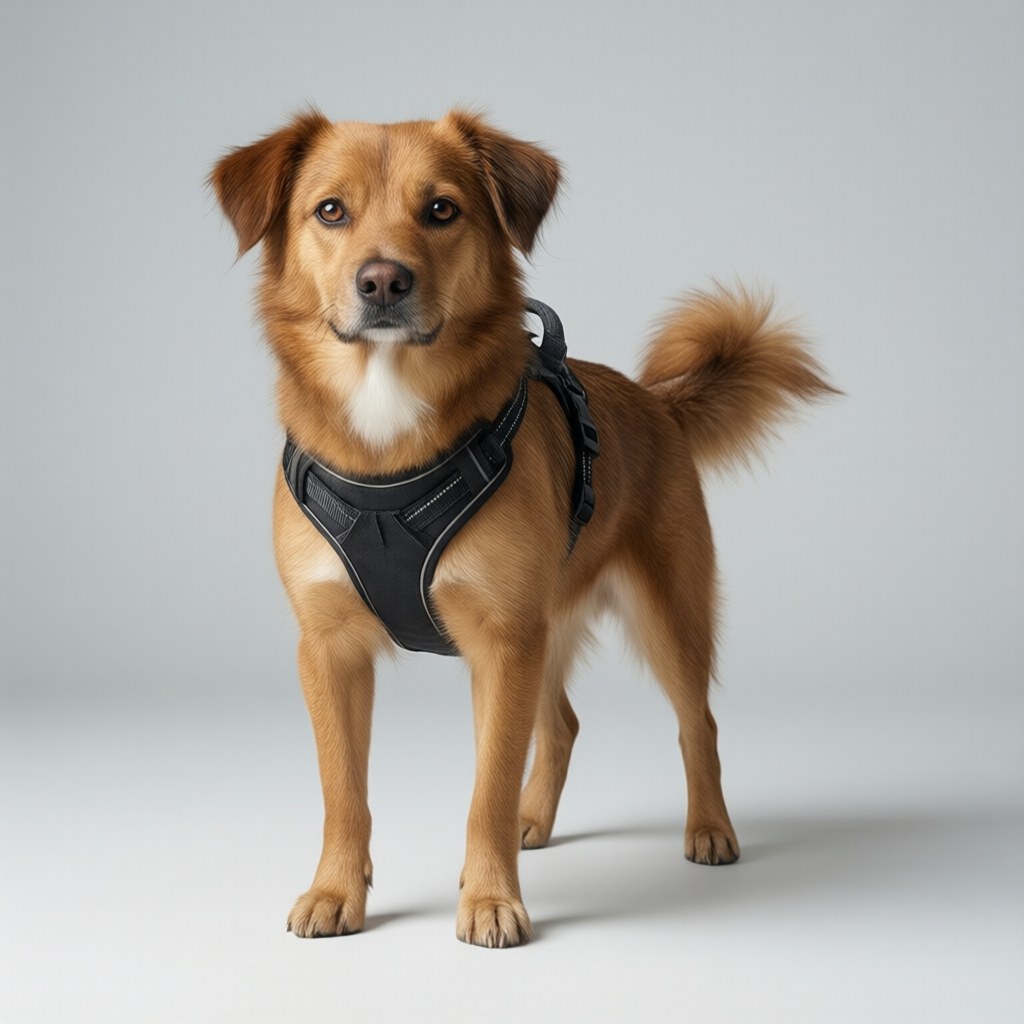
The Clickit Terrain is the only harness I found that passes CPS crash testing at 30 mph, has a three-point attachment system (not just one connection point), and is still comfortable enough for your dog to wear around the rest stop.
Three-point attachment means the harness connects to the car seat at three separate points — two on the harness sides and one at the back. This prevents your dog from rotating or submarining under the seatbelt in a crash. Single-point harnesses allow the dog to spin and potentially slip out.
The Terrain adds a handle on the back for helping your dog in and out of the car, plus attachment points for a leash so you can use it as a walking harness at your destination. Available in four sizes from small to extra-large.
Safety rating: CPS Certified at 30 mph
Pros: Three-point attachment, CPS certified, padded, dual-purpose (car + walking)
Cons: Expensive, sizing runs small — measure carefully and size up if between sizes
Best for: Anyone who wants the highest level of crash protection available for their dog.
—
### 2. Kurgo Enhanced Strength Tru-Fit — Best Value
Kurgo Enhanced Strength Tru-Fit Dog Car Harness
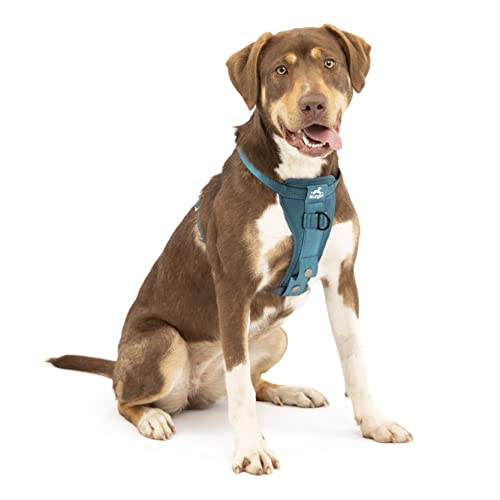
Kurgo’s Tru-Fit is the harness most people should buy if they can’t justify the Sleepypod price. It’s been crash-tested at 30 mph for dogs up to 75 pounds (Kurgo’s own testing, not CPS certified, but they publish their test protocol and results).
The steel nesting buckles are the standout feature — they’re the same type of hardware used in rock climbing, rated to hold far more than crash forces require. The five-point adjustment system lets you dial in the fit for different body shapes, which matters more than most people realize. A loose harness is a dangerous harness.
One downside: it’s a car harness only. The tether that connects to the seatbelt is included, but the harness itself isn’t designed for walking. You’ll need a separate walking harness.
Safety rating: Kurgo crash-tested at 30 mph (up to 75 lbs), not CPS certified
Pros: Steel buckles, good adjustment system, affordable, includes tether
Cons: Not CPS certified, car-only (not for walking), limited to dogs under 75 lbs for crash protection
Best for: Budget-conscious owners who want real safety hardware without the premium price.
—
### 3. EzyDog Drive Dog Car Harness — Best for Medium to Large Dogs
The EzyDog Drive is built specifically for the car and it shows. Wide 2-inch straps, a breast plate that covers more of the chest than most harnesses, and a quick-release buckle that’s easy to undo when you arrive — but stays locked under force.
It attaches via a seatbelt loop that threads through your car’s existing seatbelt. No tether, no LATCH anchors — just slide the seatbelt through the loop and click it in. This makes it the simplest harness to install correctly, which matters because a harness you can’t figure out is a harness you won’t use.
EzyDog crash-tested this harness internally. It’s not CPS certified, but the construction quality and strap width are genuinely better than most harnesses in this price range. Available in sizes M through XXL (dogs 25–110 lbs).
Safety rating: EzyDog internal crash test (not CPS certified)
Pros: Wide straps, easy seatbelt attachment, quick release, good size range
Cons: Not CPS certified, single-point attachment, no walking capability
Best for: Medium to large dogs where ease of use is the priority.
—
### 4. Allsafe Dog Car Harness — Best for Large and Extra-Large Dogs
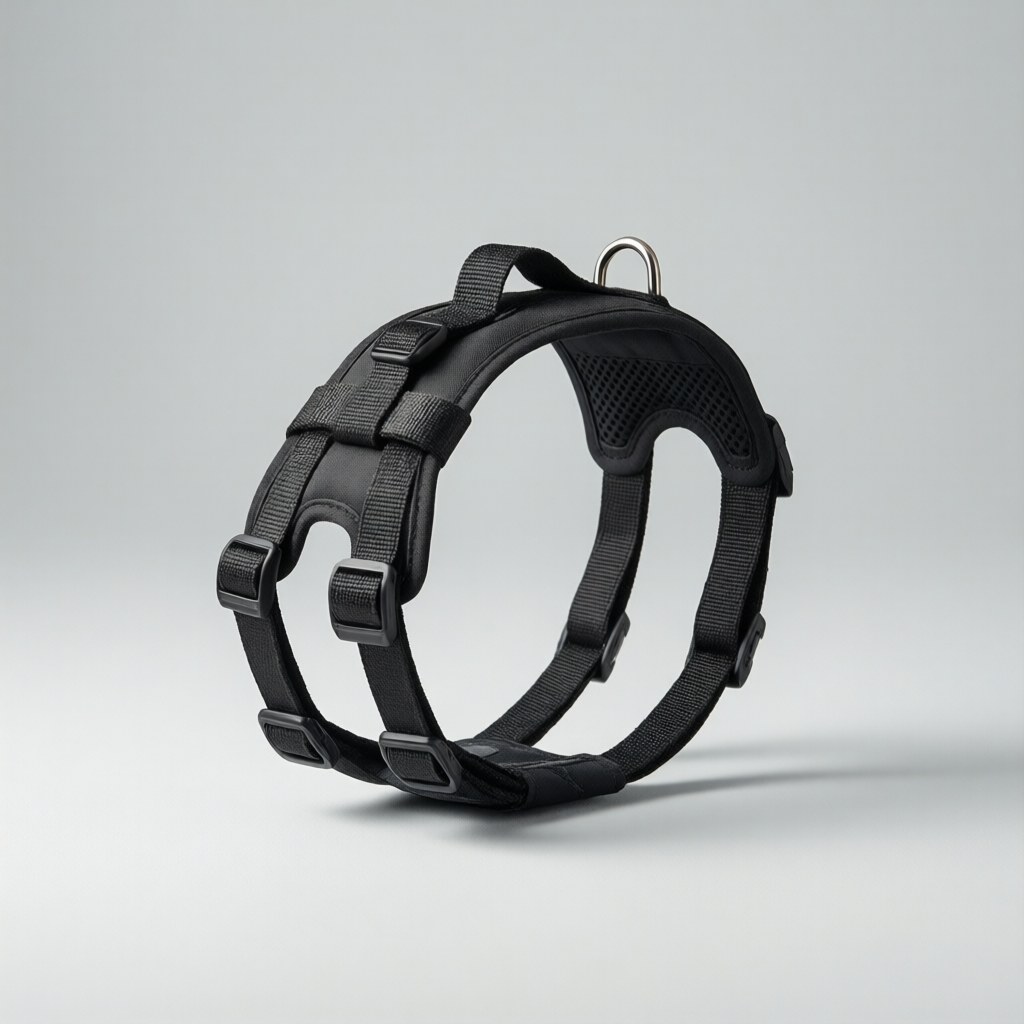
The Allsafe is the harness for big dogs. It’s the only CPS-certified harness rated for dogs up to 110 pounds — most others cap at 75 pounds or below. If you have a German Shepherd, Lab, or Pit Bull, this is the one with independent safety verification for your dog’s weight.
The harness uses a single-point attachment to the seatbelt with a short tether, and the wide strap design distributes crash forces across the chest plate. The steel D-ring and reinforced stitching handle the higher forces that a 100+ pound dog generates in a crash.
The downside: it’s a car-only harness, the design is utilitarian (your dog won’t win any fashion contests), and it’s expensive. But for large dogs, it’s one of the only options with verified crash protection.
Safety rating: CPS Certified at 30 mph (up to 110 lbs)
Pros: CPS certified for large dogs, steel hardware, wide straps
Cons: Expensive, car-only, utilitarian appearance
Best for: Large and extra-large dogs (75–110 lbs) where CPS certification at that weight is non-negotiable.
—
### 5. Mighty Paw Safety Harness — Best Budget Option Under 30 Dollars
Mighty Paw Safety Harness and Seatbelt Tether
Let’s be honest: a 25-dollar harness is not going to match the crash protection of a CPS-certified 100-dollar harness. But if budget is the barrier between your dog riding loose and your dog riding restrained, the Mighty Paw is better than nothing — and that’s not a small thing.
It has reflective stitching, a padded chest plate, and includes a seatbelt tether. The hardware is steel, not plastic. It’s a step up from the generic harnesses you’ll find at pet stores for the same price, and a huge step up from letting your dog ride loose.
Use it as a restraint harness, not a crash harness. It will keep your dog from distracting you while driving and prevent them from being thrown around in a sudden stop. In a high-speed crash, it will perform better than no harness, but don’t expect it to match the Sleepypod or Allsafe.
Safety rating: No independent crash test certification
Pros: Affordable, includes tether, reflective stitching, steel hardware
Cons: Not crash tested, single-point attachment, minimal padding, sizing inconsistent
Best for: Restraining your dog during normal driving when budget is the limiting factor. Not a substitute for a CPS-certified harness.
—
How to Properly Use a Dog Car Harness
Even the best harness won’t protect your dog if you use it wrong. Here are the most common mistakes:
Using a walking harness as a car harness. Walking harnesses are designed for pulling, not crash forces. The straps are too narrow, the buckles are plastic, and there’s no chest plate. They will fail in a crash. Use a dedicated car harness or a dual-rated harness like the Sleepypod Clickit Terrain.
Attaching to the wrong part of the seatbelt. Thread the seatbelt through the harness’s seatbelt loop or attach the tether to the seatbelt itself — not to the seatbelt receiver (the buckle part that clicks in). The receiver is not designed for side loads and can break.
Leaving too much slack in the tether. Your dog should be able to sit and lie down comfortably, but the tether should be short enough to prevent them from reaching the front seat. In a crash, excess slack means more distance to accelerate before the harness catches, which means more force on your dog’s body.
Not checking the fit every trip. Harnesses shift. Check that all straps are snug and buckles are secured before every drive. A 10-second check could save your dog’s life.
Letting your dog ride in the front seat. Even with a harness, the front seat is more dangerous for dogs. Airbags deploy at 200 mph — they can kill a medium-sized dog. The back seat is safer. See our dog car travel guide for full vehicle safety tips.
—
What About Dog Seatbelts and Zipline Tethers?
You’ll see a lot of cheap “dog seatbelts” on Amazon — the ones that clip to your dog’s collar or harness and plug into the seatbelt buckle. Most of these are 10-dollar pieces of nylon webbing with a plastic clip. They will restrain your dog from moving around the car, which is better than nothing, but they are not crash-tested and they will not protect your dog in a serious accident.
Zipline-style tethers (the kind that run between rear headrests and give your dog a few feet of movement) are for preventing distracted driving, not crash safety. They keep your dog out of your lap while driving, which is genuinely useful. But in a crash, the zipline allows your dog to hit the back of the front seat or the car door at speed.
Use a zipline for daily driving if your dog can’t handle being fully restrained. Use a crash-tested harness for highway driving and any trip over 30 mph.
—
Car Safety Beyond the Harness
A car harness is one piece of the puzzle. For the full picture, see our dog car travel guide and our car emergency kit for dog owners. The essentials:
- Never let your dog ride with their head out the window. Debris, bugs, and sudden stops are all hazards. Eye injuries from debris are common and preventable.
- Never leave your dog in a parked car. On a 75°F day, the interior of a car reaches 100°F in 10 minutes. On a 95°F day, it reaches 140°F. Heat stroke kills fast.
- Carry a first-aid kit designed for dogs. Our car emergency kit guide has the full checklist.
- Use a back seat barrier or cargo area divider. Even with a harness, a physical barrier adds another layer of protection.
—
Shop This Post
—
Your dog depends on you for their safety. A crash-tested harness is one of the few purchases that you hope you’ll never need — but if you do need it, you’ll be grateful you bought the right one. Drive safe.
—
n
GearHound is reader-supported. When you buy through links on this site, we may earn an affiliate commission at no extra cost to you.
⛺ Get Your Free Camping with Your Dog Checklist
Join our newsletter and get this free printable plus weekly tips.
Price Check
Prices verified via our product tracker. Updated Sep 27.
| Amazon.com : Sleepypod Clickit Terrain Dog Safety Harness | $170.84 | 3.6★ |
| Amazon.com : Kurgo Enhanced Strength Tru-Fit Dog Car Harne | $32.99 | 4.4★ (7,845) |
| Amazon.com : EzyDog Drive Dog Car Harness, Crash Tested an | $125.00 | 4.2★ (1,044) |
| Amazon.com : Mighty Paw Dog Car Harness - Vehicle Safety G | $25.99 | 4.6★ (1,053) |
As an Amazon Associate we earn from qualifying purchases.