This article contains affiliate links. We may earn a commission from qualifying purchases.
Some content on this site is AI-assisted and reviewed by our editorial team.
Why Your Dog Needs Different Gear for Camping Than for the Dog Park
Last updated: June 2026 | By GearHound
You have got your tent, your sleeping bag, and your camp stove dialed. But your dog? They cannot just “make do” with what you bring. Dogs have different thermoregulation, different hydration needs, and different vulnerabilities than we do. A dog that sleeps fine in your climate-controlled bedroom can get hypothermic in a 40-degree tent. A dog that drinks from a puddle at home can pick up giardia from a mountain stream.
I have camped with dogs in everything from summer desert to late-fall snow, and the gear list below is what I actually pack every single time. Not theory. Not wishful thinking. This is the stuff that keeps your dog safe, comfortable, and ready for the trail the next morning.
Sleep Gear: Because Cold Ground Sucks for Dogs Too
Your dog does not need a four-season mountaineering setup, but they do need insulation from the ground. A dog lying directly on a tent floor loses body heat faster than you would lying on the same surface. Here is what goes in my dog’s sleep kit:
Dog Sleeping Bag or Insulated Pad
A dedicated dog sleeping bag is not a gimmick. It is a real piece of gear that traps your dog’s body heat instead of letting it bleed into the ground. If your dog runs hot, an insulated pad might be enough. If you camp below 50 degrees Fahrenheit, get the bag.
For summer car camping, a self-inflating sleeping pad cut to your dog’s size works great. For shoulder-season and winter, pair the pad with a bag. Check out our best camping sleeping bags guide for human-sized options, and the dog-specific picks below.
Dog Tent or Sleep Shelter
If your dog sleeps inside your tent (most do), you do not need a separate dog tent. But if your dog sleeps outside or you want them to have a shaded retreat during the day, a dog-specific camping shelter is worth it. Pop-up dog tents provide UV protection, bug screening, and a wind break. They are light enough to move around camp as the sun shifts.
Compact Dog Bed
For car camping, a compressible dog bed adds barely any weight to your kit but makes a massive comfort difference. Look for beds with a waterproof bottom because tent floors get damp. The Kurgo Wander Bed is my go-to — it packs small, sheds dirt, and the waterproof backing means you can throw it on wet grass outside the tent too.
Food and Water: More Than You Think You Need
The biggest mistake first-time dog campers make is underestimating how much food and water their dog needs at altitude and in extreme temperatures. Your dog burns more calories hiking and staying warm at night. Plan for 25 to 50 percent more food than a normal day, and always carry more water than you think you will use.
Collapsible Travel Bowls
Silicone collapsible bowls are the standard for a reason. They pack flat, weigh nothing, and clean easily. I carry two — one for food, one for water — so I am not rinsing kibble residue out before every drink. The Outward Hound Travel Bowl is the model I have used for three seasons. Still holding up.
Food Storage That Keeps Critters Out
Bear canisters are for your food. Your dog’s food needs its own critter-proof container. Raccoons, mice, and chipmunks will chew through a standard stuff sack to get kibble. Use a hard-sided container like the Gamma2 Vittles Vault for car camping, or a smell-proof OPSAK bag for backpacking trips. I have a full breakdown in our dog food storage containers guide.
Extra Water Supply
Do not assume your dog can drink from every stream or lake. Giardia and leptospirosis are real risks in backcountry water. Pack enough water for your dog or carry a filter that handles both of you. For day hikes from camp, I bring a dedicated dog-specific water bottle with a built-in bowl. It is faster than pouring from a wide-mouth Nalgene, and less wasteful.
Trail Snacks for Dogs
Your dog needs calories on the trail just like you do. Pack high-protein, high-fat treats for rest stops. We cover the best options in our trail snacks for dogs guide. Avoid giving your dog human energy bars — the sugar alcohols and chocolate in some of them are toxic.
Safety and First Aid: The Kit That Lives in Your Pack
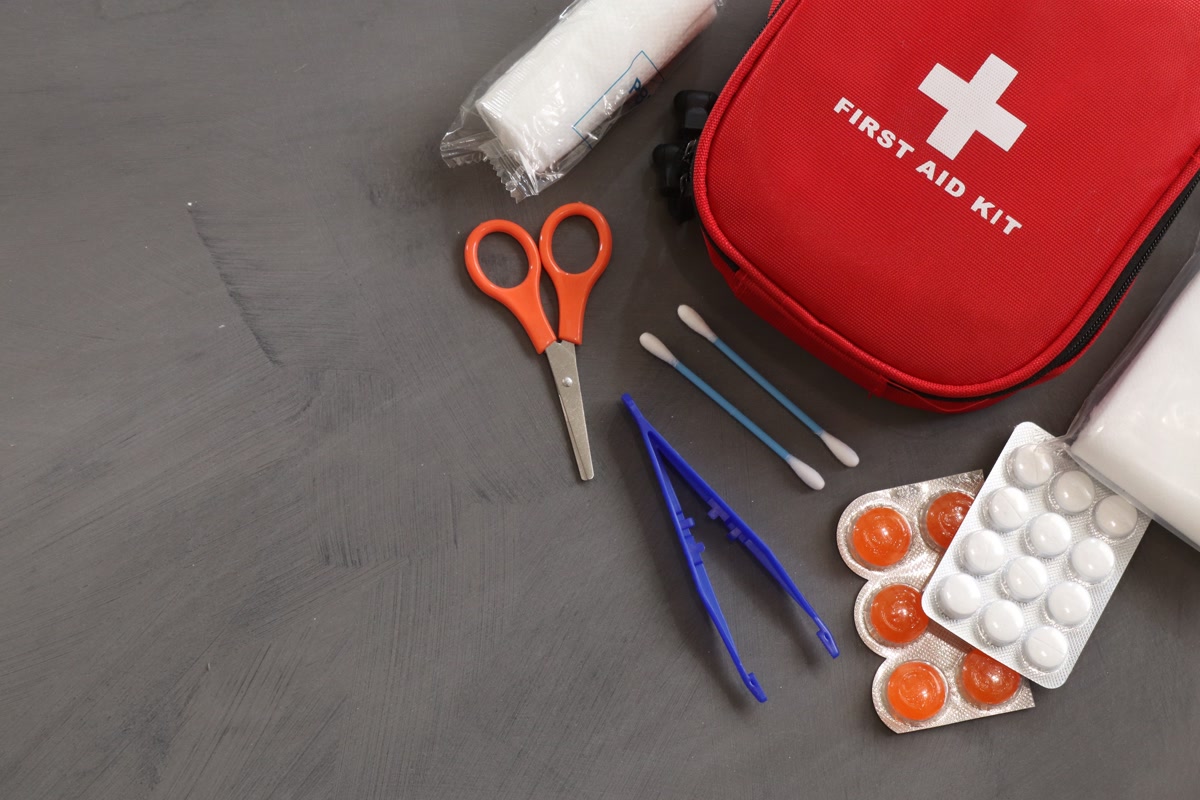
I have used my dog first aid kit twice on real trips. Once for a cut paw pad on sharp rock, once for a bee sting that caused facial swelling. Both times, having the right supplies in the side pocket of my pack turned a potential trip-ending situation into a minor delay. Here is what goes in the kit:
Dog First Aid Kit
Start with a purpose-built kit and customize it. The Adventure Medical Kits Trail Dog Kit is the best pre-built option I have found. Add your own vet wrap, extra gauze, and a digital thermometer. Read our dog first aid kit guide for the full checklist, and our trail injuries guide for how to actually use it.
Tick and Flea Prevention
Camping means ticks. Period. If you are in Lyme country or anywhere with tall grass, your dog needs prevention before the trip, not after you find a tick embedded behind their ear. Talk to your vet about a systemic preventive like NexGard or Simparica, and carry a tick removal tool in your first aid kit. Our tick and flea prevention guide covers the options in depth.
Paw Balm
Hot sand, sharp rock, frozen ground — paw pads take a beating at camp. A good paw balm like Musher’s Secret conditions pads and provides a barrier against hot surfaces and ice. Apply it before the hike, not after the damage is done.
GPS Tracker
If your dog has any chance of being off-leash at camp or on the trail, a GPS tracker is not optional. I use the Fi Series 3 Smart Collar for cell coverage areas and a Garmin Astro 900 for true backcountry trips where there is no cell signal. See our full GPS tracker guide for dogs on the trail for the breakdown.
Comfort: Because a Comfortable Dog Is a Well-Behaved Dog
A dog that is too hot, too cold, or lying on wet ground gets restless. A restless dog at camp means whining, pacing, and potentially getting into trouble. Comfort gear is not pampering — it is preventative.
Dog Cooling Vest
In summer, a cooling vest can be the difference between your dog thriving and your dog overheating. Soak it in water, wring it out, and put it on. Evaporative cooling does the rest. I have used the top options in our dog cooling gear guide. For camping specifically, I like a vest that can be re-soaked easily at camp and does not require refrigeration.
Dog Camp Bed or Mat
Different from a sleeping pad — this is for lounging at camp, not overnight insulation. A thin, packable foam mat gives your dog a clean, dry spot to lie down that is not the dirt. It also keeps them off ant hills and thorny ground cover.
Bug Spray for Dogs
Human bug spray is not safe for dogs. DEET is toxic to them. Use a dog-specific repellent, and check our bug spray for dogs guide for products that actually work without dangerous chemicals.
Leash and Restraint: Keeping Your Dog Safe at Camp
Campgrounds have rules. Most require dogs to be leashed at all times. Even if yours does not, a loose dog at camp can chase wildlife, eat something dangerous, or wander into a neighboring campsite and cause problems. Here is how to keep your dog secure without keeping them miserable.
Tie-Out Stake
A corkscrew-style tie-out stake gives your dog freedom to move around camp without you holding the leash. Get one rated for at least twice your dog’s weight — the force of a dog hitting the end of the line is more than their body weight. The Petmate Anchor Tether Stake is cheap, light, and has never pulled loose on me in normal soil.
Long Line
A 15 to 30-foot long line gives your dog room to explore without being fully off-leash. Use a flat, non-elastic line — bungee lines can snap back and cause injuries. For backpacking camps where stakes do not work well in rocky ground, I just loop the long line around a tree trunk and clip it with a carabiner.
Heavy-Duty Leash for Around Camp
Your lightweight trail leash might not cut it at camp, where your dog will be tied up for longer periods. Use something durable. Check our best dog leashes guide for options that can handle being clipped to a tie-out without fraying.
Harness for Camping
If your dog is going to be on a tie-out, use a harness, not a collar. A collar tied to a stake means constant pressure on the neck if your dog pulls. A harness distributes that force across the chest. Look at our best dog hiking harnesses guide for harnesses that work well for both the trail and the tie-out.
Trail Gear: What Your Dog Wears on the Move
If you are hiking from your base camp, your dog needs trail-specific gear in addition to the camp gear above.
Dog Boots
Rocks get hot. Trails get rough. Snow gets crusty. Boots are not just for extreme conditions — they are paw insurance. If your dog has never worn boots, start with short walks a week before your trip. See our best dog boots guide for models that actually stay on and do not chafe.
Dog Backpack
If your dog is over 30 pounds and in good shape, they can carry their own food and water. A fitted dog backpack frees up your pack and gives your dog a job. I have used six models in our dog backpack field test. Rule of thumb: no more than 25 percent of your dog’s body weight, and balance the load side-to-side.
Rain Gear
A wet dog at camp is a cold dog at night. If rain is in the forecast, pack a lightweight rain shell for your dog. Our dog rain gear guide covers the best options. A wet dog shaking off in a small tent is also a great way to ruin your sleeping bag, so a rain coat saves everyone grief.
Tips for First-Time Dog Campers
Do a trial run in your backyard. Set up the tent, have your dog sleep in it, see how they react. Some dogs pace all night the first time. Some love it immediately. You want to know which kind of dog you have before you are three miles from the car.
Check campground rules before you book. Not all campgrounds allow dogs, and many that do have restrictions on breed, size, or off-leash privileges. National parks are generally dog-unfriendly. National forests and BLM land are generally dog-friendly. Know before you go.
Pick up after your dog. Pack out waste. Do not bury it near camp. The smell attracts wildlife, and it is the number one reason campgrounds ban dogs.
Keep your dog’s routine as normal as possible. Feed at the usual times. Bring their regular food. A camping trip is not the time to switch proteins or try a new brand. GI issues in the backcountry are miserable for everyone.
Know the wildlife risks. If you are in bear country, your dog should be leashed at all times. A dog that chases a bear and comes running back to you with the bear in pursuit is a worst-case scenario. Read our bear safety guide for dog hikers before you go.
What Not to Bring
- Raw food diets that need refrigeration. Unless you have a cooler and are car camping in cool weather, raw food spoils. Stick to kibble or freeze-dried.
- Extendable retractable leashes. They tangle, they break, and they are banned at most campgrounds. Use a fixed-length leash or long line.
- Your dog’s expensive orthopedic bed from home. It will get dirty, wet, and possibly chewed by a curious chipmunk. Bring a camp-specific bed.
- Squeaky toys. Your neighbors at the campground do not want to hear them at 6 AM. Pack a quiet chew toy instead.
- Anything you would be upset to lose. Gear gets lost, chewed, buried in dirt, and dropped in lakes at camp. Leave the fancy collar with the nameplate engraving at home.
The Bottom Line
Camping with your dog is one of the best things you can do together. The look on a dog’s face when they wake up in a tent and realize the whole outside is their playground for the weekend — that is worth every piece of gear on this list. But only if you are prepared. The gear above is not about luxury. It is about keeping your dog safe, warm, hydrated, and comfortable enough that they are ready for the trail the next morning.
Start with the essentials: sleep insulation, food and water, first aid, and a restraint system. Add comfort gear and trail gear based on where you are going and what you are doing. Do a backyard test run. Check the rules. And when in doubt, pack more water than you think you need.
See you out there.
GearHound is reader-supported. When you buy through links on this site, we may earn an affiliate commission at no extra cost to you.
⛺ Get Your Free Camping with Your Dog Checklist
Join our newsletter and get this free printable plus weekly tips.
Price Check
Prices verified via our product tracker. Updated Sep 27.
| Amazon.com : Gamma2 Vittles Vault Dog Food Storage Contain | $34.99 | 4.6★ (3,394) |
| Pet Supplies : lesotc Dog Water Bottle, Portable Water Dis | $16.98 | 4.6★ (13,583) |
| Pet Supplies : Adventure Medical Kits Trail Dog Medical Ki | $22.68 | 4.8★ (457) |
| Amazon.com : Musher's Secret All-Natural Dog Paw Balm, All | $24.99 | 4.7★ (13,562) |
| Amazon.com : Aspen Pet 8mm by 16-Inch Stake with 20-Feet o | $19.69 | 4.4★ (659) |
As an Amazon Associate we earn from qualifying purchases.